Dental implant placement from £1,804 – book your consultation to find out more today!
Dental implants offer a strong, secure, and natural-looking solution for missing teeth. Implants are titanium posts that are surgically placed in the jawbone to act just like tooth roots. As titanium is a durable metal that is very well tolerated by the body, these cylindrical posts eventually fuse with the bone, providing a firm foundation to support fixed bridges, crowns, or dentures.
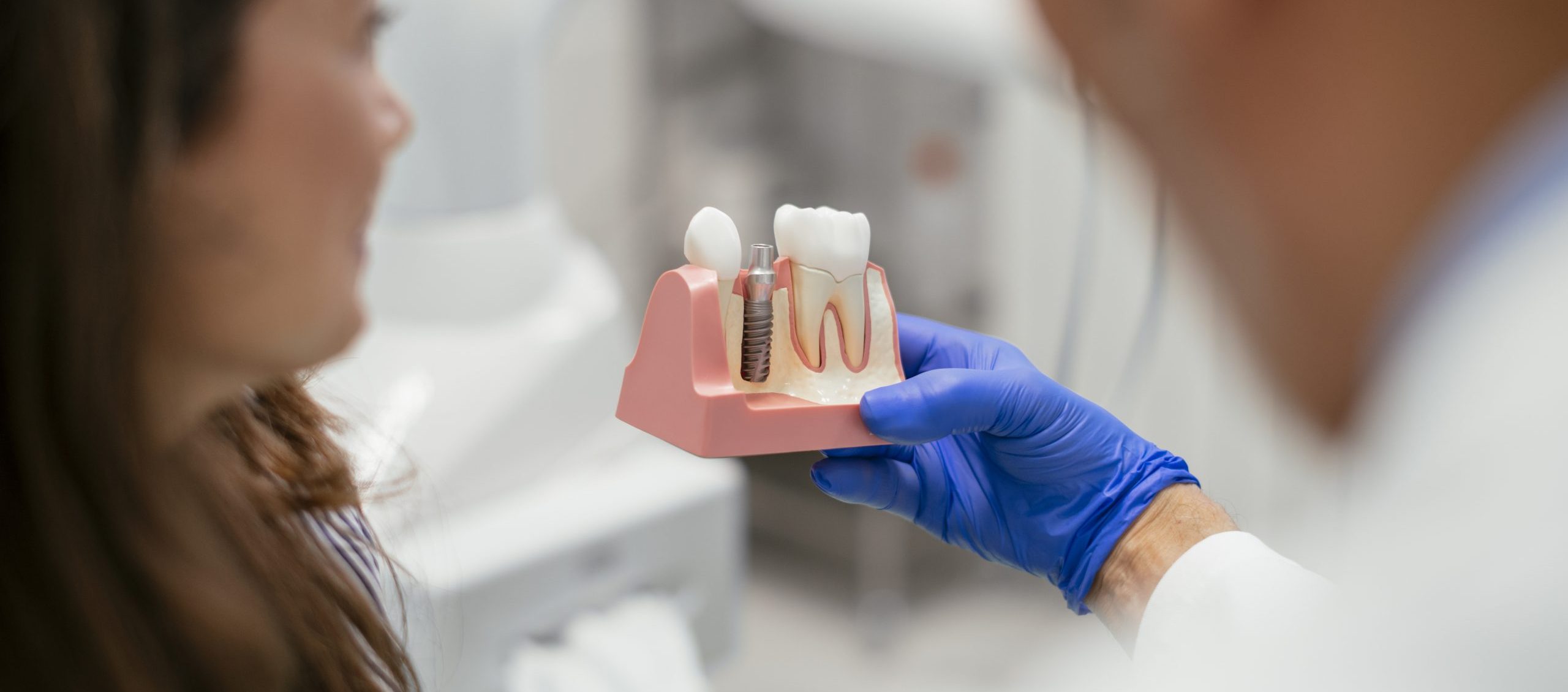
Benefits of dental implants
- Secure – dental implants stay firmly in place and will not slip when you are eating or speaking or become loose over time. As they are held in place by your bone, you can be confident of their strength and durability.
- Aesthetic – implants look and feel just like natural teeth. You will be able to eat, drink, and talk just as you did before, as well as show off a winning smile.
- Effective – dental implants are a well-established, safe, and highly effective way of replacing one or more missing teeth in any part of your mouth.
- Supportive – implants help to support and sustain your facial structure and remaining natural teeth. They protect your gum and can be fitted with no detrimental effect on your existing healthy teeth.
- Innovative – implants use cutting-edge digital dental technology combined with specialist expertise to create the next best thing to a natural tooth.

Get in touch
Dental implant reviews
Restoring your smile with dental implants is one of the most rewarding investments you can make in your health, confidence, and quality of life. Choosing the right team to guide you makes all the difference. At our practice, we combine advanced digital technology with personalised, compassionate care to ensure your implant journey is smooth, comfortable, and predictable from initial consultation to your final, natural-looking smile.
We treat every patient like family, taking the time to answer all your questions and tailor a treatment plan around your unique needs. You don’t just have to take our word for it; see how we’ve helped transform smiles by reading our patient reviews here.
Read reviewsWhat is the dental implant treatment process?
Step 1: Initial consultation & planning
We carry out a full assessment of your general health, how your teeth fit together, your oral health, and the density of your jawbone. If we discover you have insufficient bone volume, you may need a grafting procedure to allow for the successful placement of implants.
Step 2: Fitting
The titanium implant is placed into your jawbone by our skilled implantologist, Dr Andrew Norman, using a local anaesthetic to minimise any discomfort. The implant will take 3-6 months to heal and fuse to the bone, so a temporary tooth is fitted to protect your gum during the healing process.
Step 3: Smile!
Once your implant has fully healed and integrated, we fit your final crown or bridge and complete your brand-new smile. We will give you some advice on how to look after your dental implant and leave you to start showing off your smile!
Implant treatment normally has two stages. First, the implant is placed in the jaw. Then, when the jaw has healed, replacement teeth are attached to the implant. In some situations, it is possible for temporary teeth to be attached to an implant at the time of fitting.
Who will carry out my dental implant treatment?
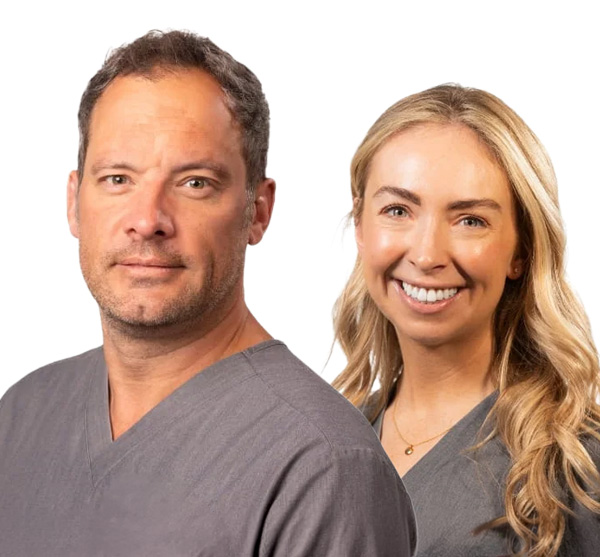
Our tooth implants are placed by Dr Andrew Norman and Dr Abigail Sanders-Dutton.
He has completed several courses on the subject, including the 18-month-long comprehensive training at the PID Academy which he started in 2014. Dr Norman is a member of The Association of Dental Implantology and enjoys placing and restoring implants.
She has completed multiple postgraduate qualifications and became a member of the Royal College of Surgeons in 2021. She gained a postgraduate diploma in Aesthetic and Restorative Dentistry in 2024 and, in 2025, completed a postgraduate certificate in implant dentistry, which enables her to place and restore dental implants.
Single implants
A missing tooth can be effectively replaced using a crown fitted to a single dental implant. The replacement tooth is strong, secure, and durable, able to withstand pressures from chewing, and look just like your existing teeth. Alternative options for a single missing tooth are available, including a single tooth denture or bridge, but these are not as effective as an implant. A single implant can be fitted with no damage to the remaining healthy teeth, prevents unwanted movement, and strengthens the jaw.
Multiple implants
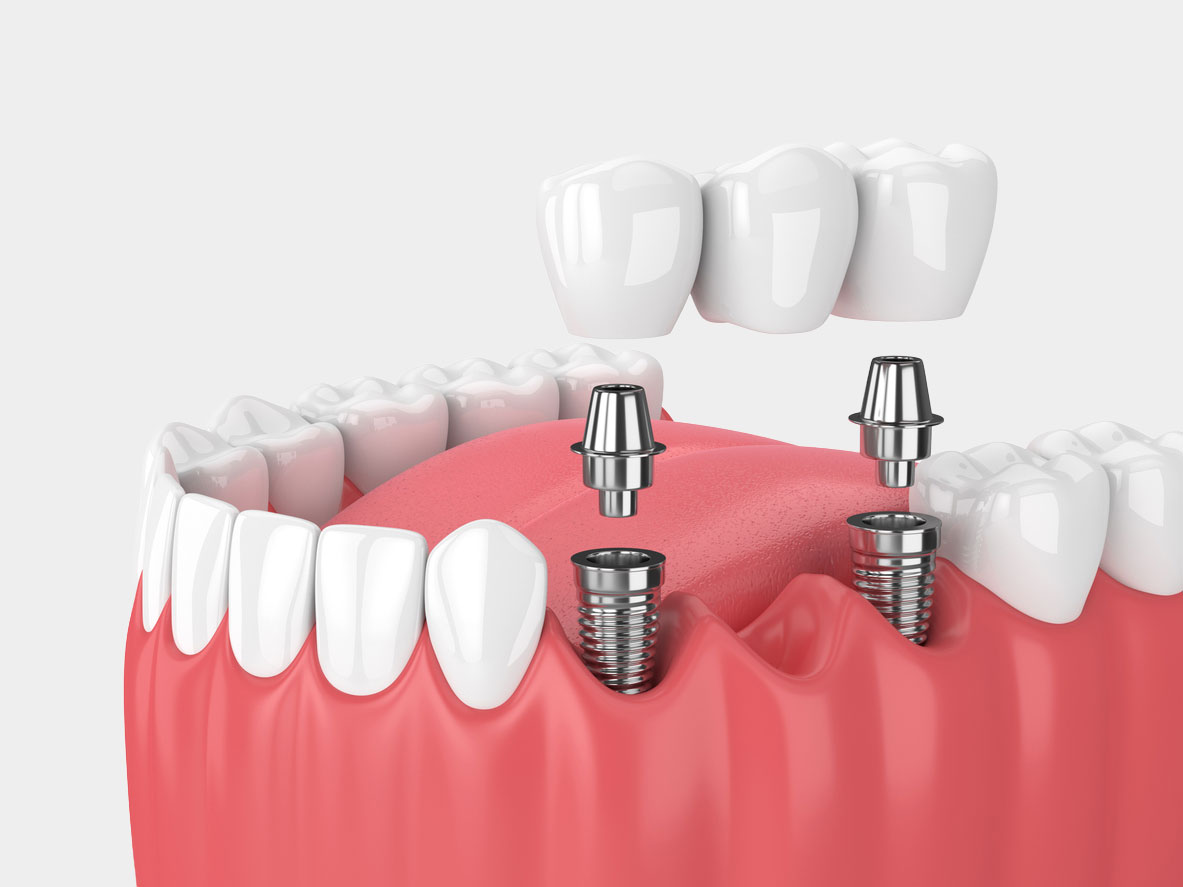
If you have several missing teeth, there are various implant options to consider to fill the gaps. Separate single implants can be placed, but you do not necessarily need an implant fitted for each missing tooth. Strategically placed implants can be used to support a bridge to replace a few adjacent teeth. This method is particularly effective in cases where the jawbone may not be sufficient for implant treatment in some places.
Implant-retained dentures
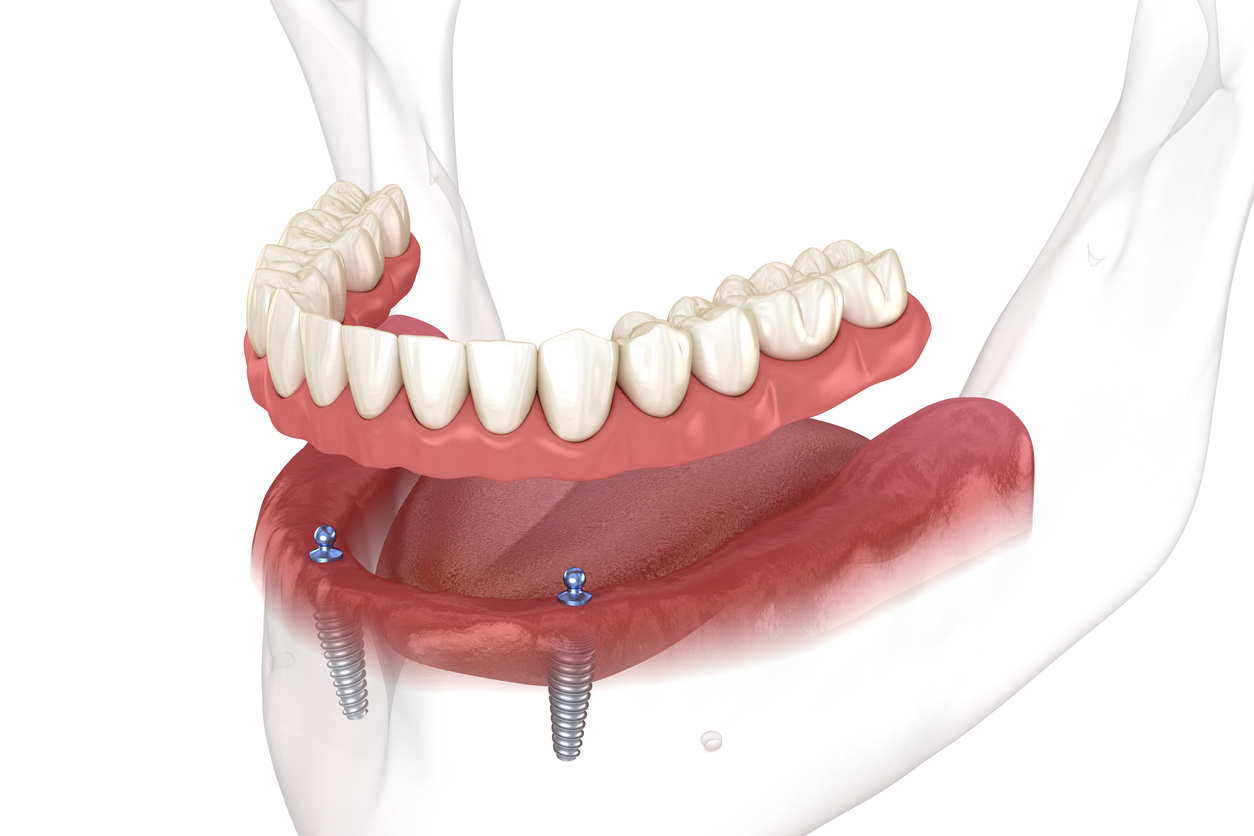
Implant-retained dentures offer a modern, highly stable alternative to traditional removable dentures, allowing you to chew, bite, and smile with complete confidence. By securing custom-made dentures to titanium implants anchored directly into the jawbone, this treatment keeps your new teeth firmly in place—so you can enjoy your favourite foods without worrying about slipping or discomfort. Beyond restoring natural function and appearance, the implants act like natural tooth roots, stimulating the jawbone to prevent bone loss and ensure a long-lasting, comfortable fit.
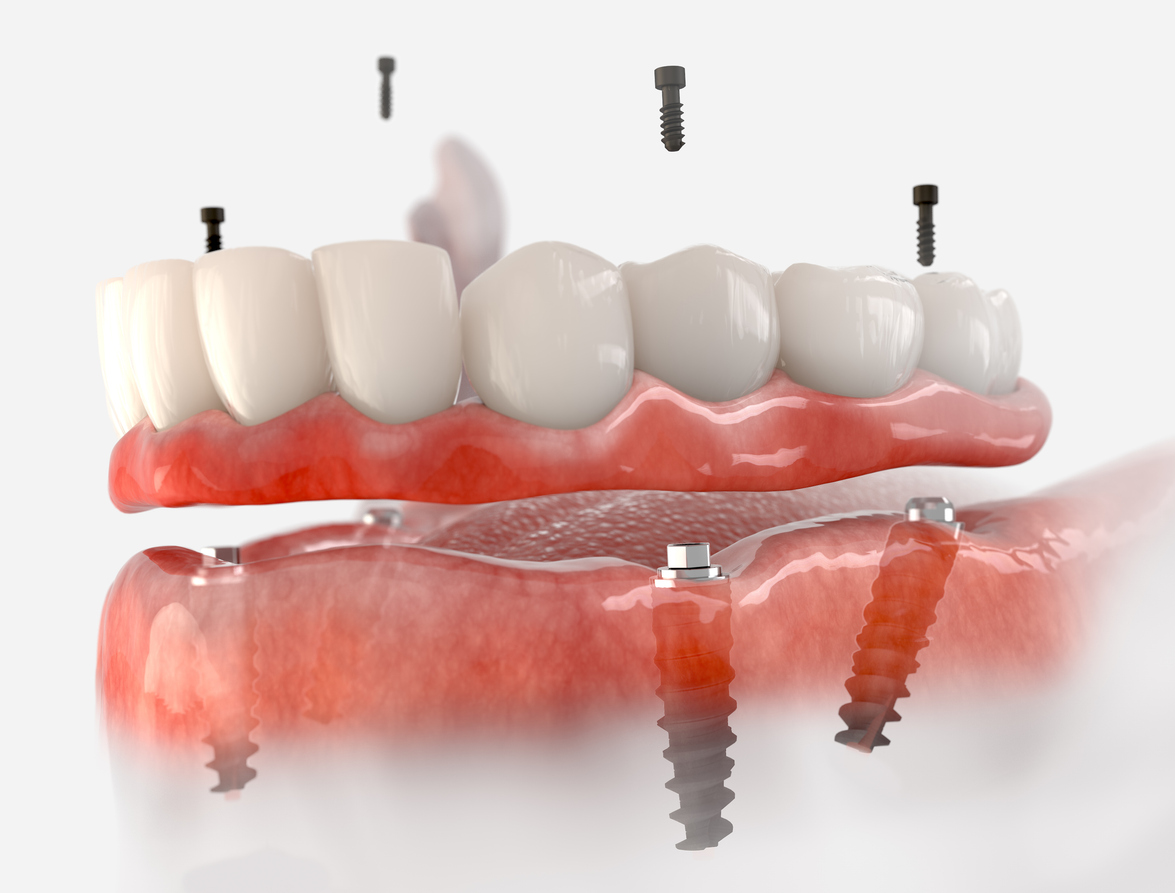
Full arch implants (All-on-4)
Traditionally, dentures have been the go-to option for replacing a full upper or lower arch of missing teeth. However, despite the advances in denture treatment, they can be uncomfortable to wear and do not stop the jawbone from degrading over time. Dental implants are seen as the superior alternative and offer two main full arch options:
- A fixed full arch bridge of new teeth, supported by four or six precisely placed dental implants. Once they have settled, your new teeth will feel completely natural and enable you to eat, drink and speak as you did before.
- A denture, anchored into place by dental implants. Implant-supported dentures are much more secure and do not move when worn, giving you back your confidence and a full smile.
Would tooth implants be right for me?
First, you should decide whether implants could be right for you. Contact us to arrange an implant consultation and discussion, and we will let you know the possibilities. Our team will be only too happy to help you with any questions you may have.

FAQs
Am I suitable for dental implants?
Most people are suitable candidates for dental implants, provided they are generally healthy and able to undergo a routine dental procedure, such as an extraction. It’s beneficial if you have good oral hygiene, healthy gums, and enough bone in your jaw to attach the implant. If you don’t have enough bone density, this can often be rectified with a bone graft. Dental implants are not usually offered to younger patients whose jaws are still growing. It also helps if the patient is not a heavy smoker; this is because smoking can slow down the healing process. We will thoroughly discuss your overall suitability for implant treatment at your initial consultation, and you will likely be suitable for the treatment.
Is dental implant treatment painful?
We use local anaesthetic during dental implant surgery to ensure you are comfortable during the procedure. After treatment, it is normal to experience some discomfort, and this can be managed with pain relief advised by your dentist. Implant treatment is often less painful than having a tooth extraction, and most patients can return to their usual routines the next day.
How long does the dental implant treatment process take?
The whole process, from missing teeth to secure fixed replacements, can take several months. The implant surgery is a relatively quick procedure, but the implants themselves need around 3-6 months to heal and fuse before fixed permanent teeth can be placed. The treatment process will be longer if you need a bone graft or other procedure first, but your new smile will be more than worth it in the end.
How long do dental implants last?
Dental implants have the potential to last a lifetime if they are properly looked after. This includes maintaining an excellent brushing and flossing routine, looking after your general health, and attending regular check-up appointments with your dentist. The crown or bridge that the implant supports may need to be replaced over time due to normal wear and tear.
Will other people be able to tell I have dental implants?
No, dental implants look and feel exactly like natural teeth. We can match the shape and colour of your existing teeth when creating your final fixed crown or bridge, so it blends seamlessly into your smile.
Will I find it hard to talk with dental implants?
You may find it easier! As your implants are fused to your jawbone and the replacement teeth securely supported, you shouldn’t have any trouble speaking and may find your speech becomes clearer once the gap in your teeth has been filled.
How do I clean my dental implants?
You should treat your dental implants just like natural teeth and include them in your normal oral hygiene routine. As they are made from artificial materials, your implants are invulnerable to decay or cavities, but you will still need to brush and floss to keep the gum surrounding the implant healthy and problem-free.